Stress Rupture Testing

Stress rupture testing determines the tendencies of materials that may break under an overload. During the stress rupture test, material is subjected to a constant load at a constant temperature while the time to rupture is measured. The reported results are very useful in the selection of materials where dimensional tolerances are not critical, but rupture cannot be allowed.
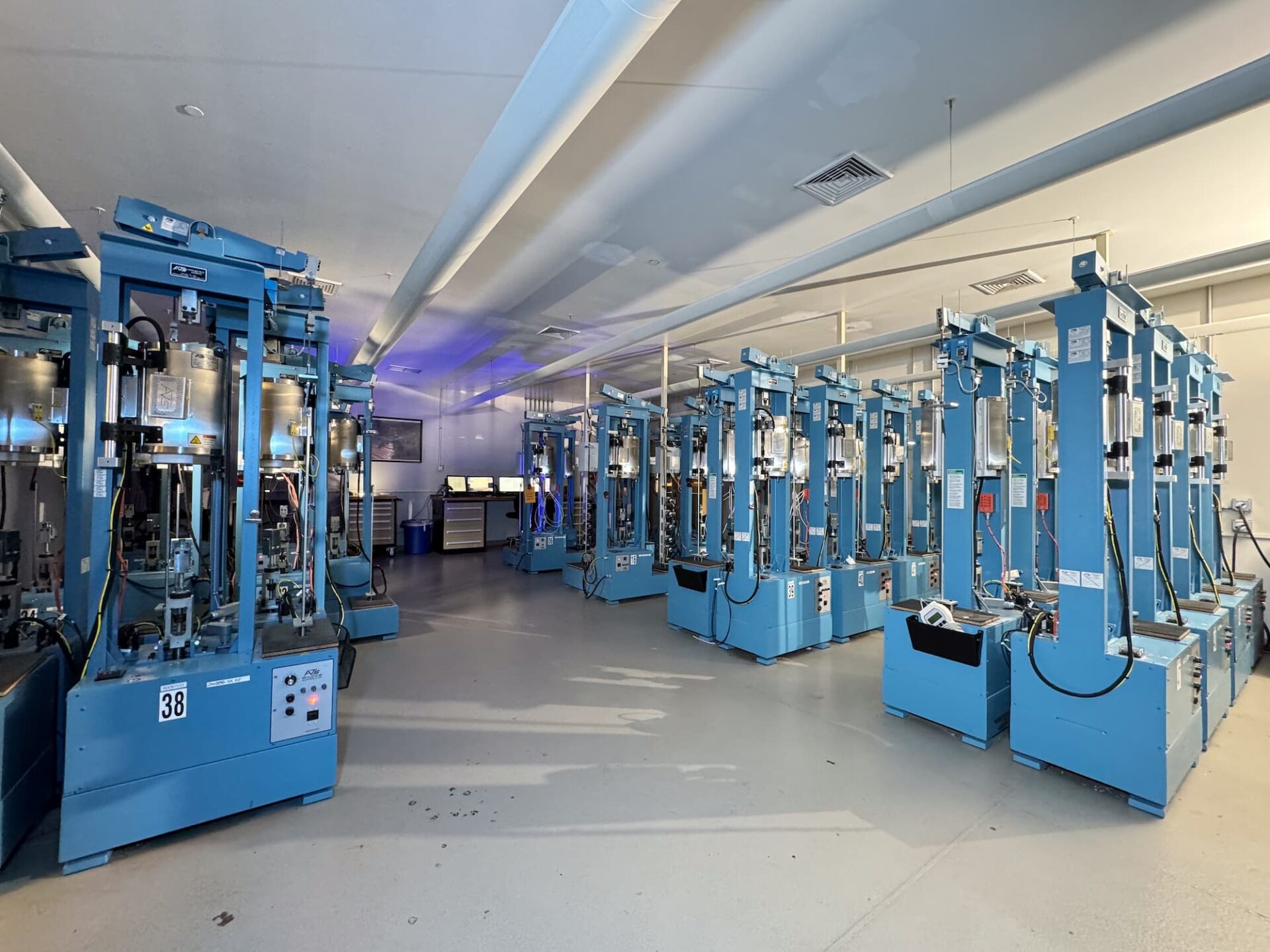
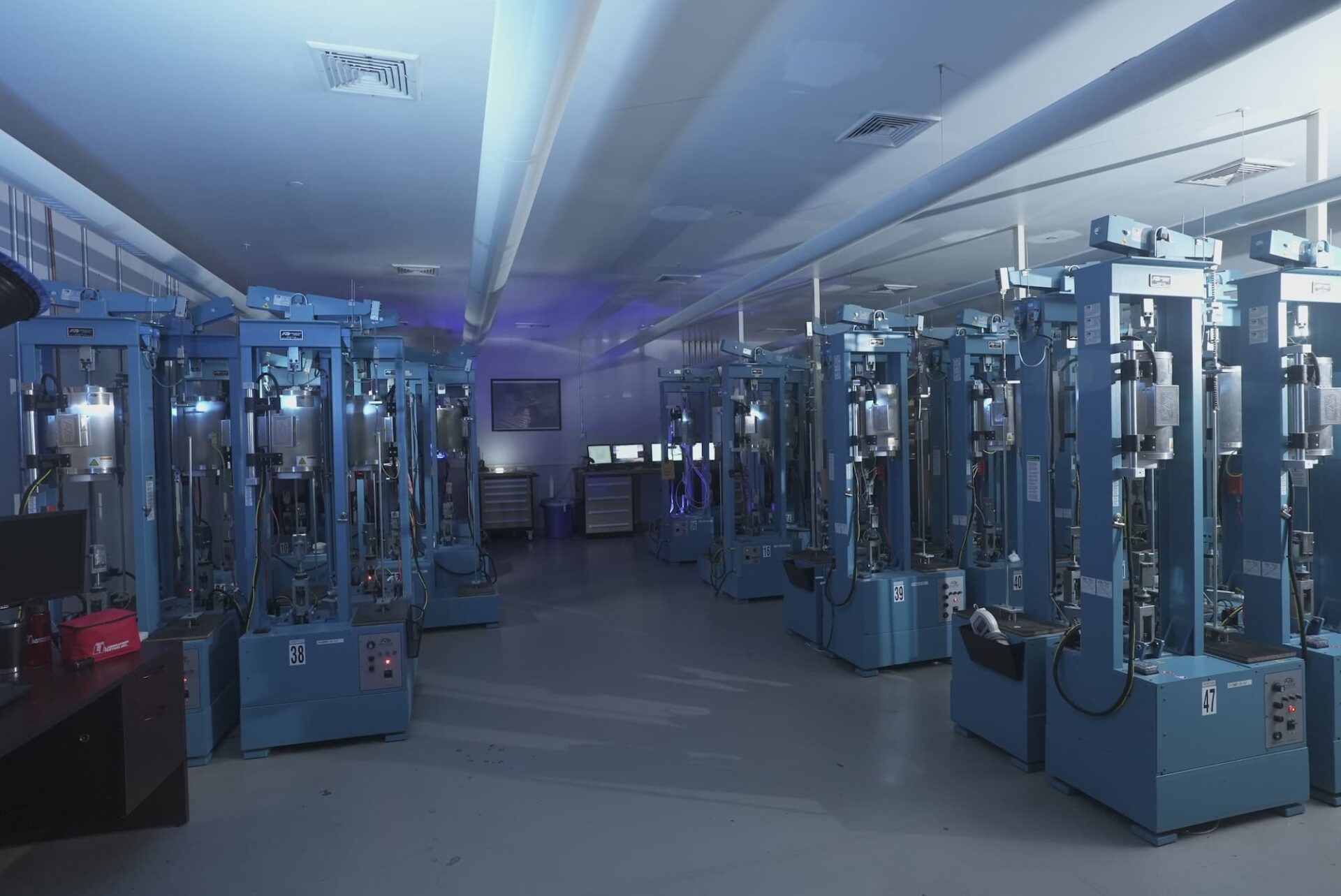
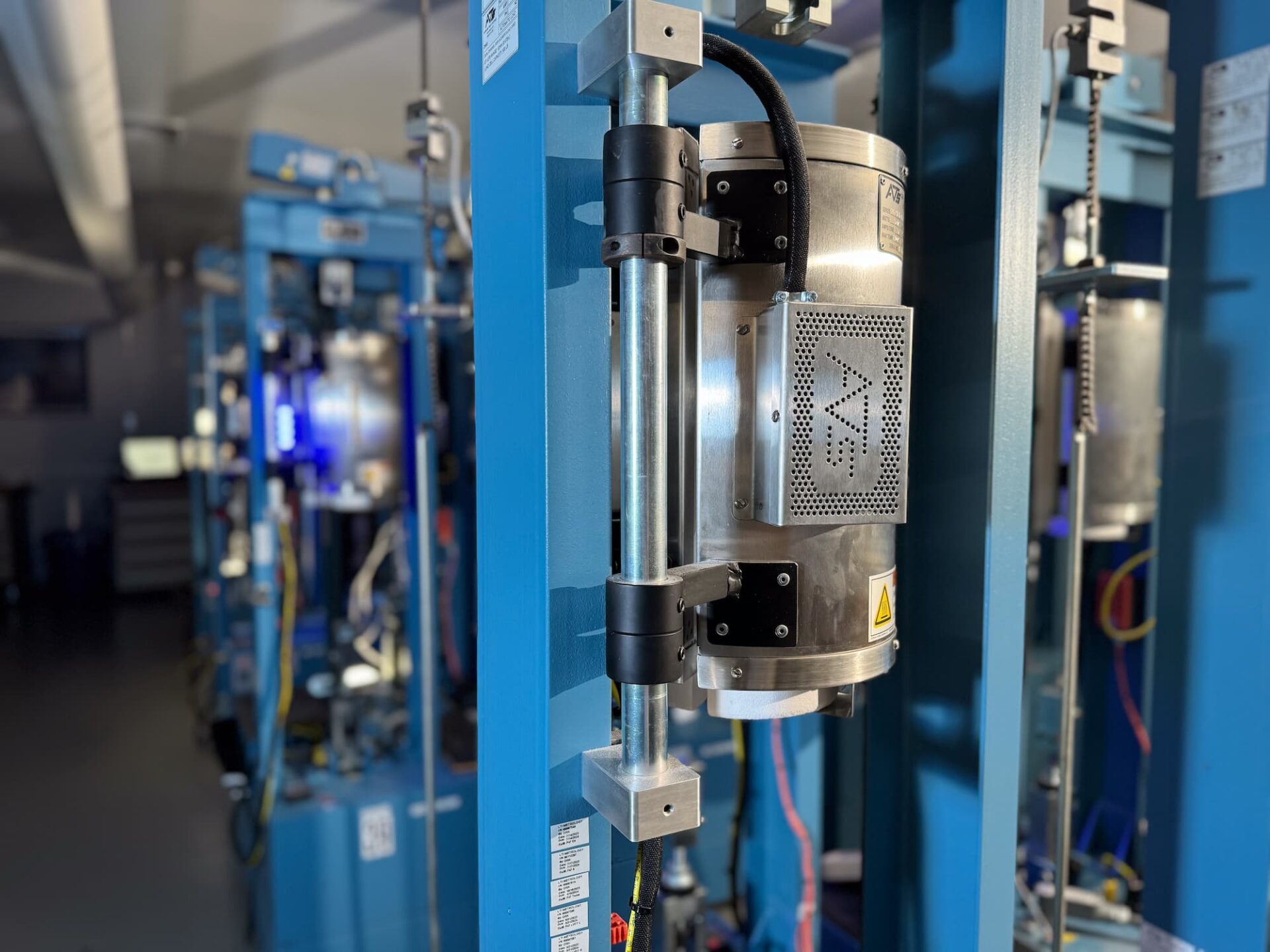
Stress rupture testing at Laboratory Testing Inc. complies with ASTM standards and is performed on fully-automated machines that test at temperatures up to 1850°F. Calibrated thermocouples attached to the test specimens provide the required temperature control of these tests. The machines automatically load at various time intervals for reliability and efficiency. Pratt & Whitney (P&W) has qualified LTI as a commercial laboratory for performing Reference MCL Manual Section Appendix 56: Code 3 stress rupture testing. The stress rupture testing systems at LTI also meet with ISO 9000 compliance and the lab has been adding to the inventory of machines each year to continue meeting the growing demand for the test.
The Test Process

Stress rupture test machines are designed to apply a static stress to a test specimen at a specific temperature for an extended period of time. The test specimen is machined from a sample of the material in question, according to specific guidelines usually published in a specification. Smooth, notched, combination smooth & notched and flat test specimens can all be used for stress rupture testing.
Stress rupture testing is generally performed at elevated temperatures which may be as high as a few thousand degrees Fahrenheit. During this type of testing, data is plotted showing stress versus time. A straight line is usually obtained at each temperature. This information can then be used to extrapolate time-to-failure for longer times. Changes in slope of the stress rupture line are due to structural changes in the material. It is important to be aware of these changes in material behavior when extrapolating the data, because they could result in errors.
LTI Capabilities
- Temperatures – up to 1850°F
- Compliance – comply with ASTM standards E4, E8, E83, E139, E292, and ISO 9000
- Approvals – P&W qualified as a commercial laboratory for Reference MCL Manual Section Appendix 56: Code 3 stress rupture testing
- Test Specimens – LTI’s Machine Shop can provide smooth, notched, combination smooth & notched and flat test specimens
Specifications
- ASTM E139
- ASTM E292
- NASM-1312-10