• FREE email and fax certifications
  • FREE pick up and delivery within 60 miles of LTI
  • Same day, next-day, and 2nd-day rush service available
  • FREE online order tracking at LTI Live Update with up-to-the-minute job status
  • Accredited by A2LA to ISO/IEC 17025 and by PRI/Nadcap

Employee Directory Contact Us Accreditations RFQ

OUR CUSTOMERS SAY:

“I wanted to say thank you to the LTI Team for all the support they have provided in our source inspections, as well as on expedited projects. It is nice to work with a group that not only has technical knowledge, but cares about getting the job done right the first time. I know I can count on the LTI team to help me in many situations. N.G.K. Metals looks forward to many more years of working with you.”

David Britt,
N.G.K. Metals Corp.

» READ MORE TESTIMONIALS


Connect with us!


We Accept:

Microscopic Examination

Microstructure Analysis for Carburization, Decarburization, Sensitization and More

Microscopic examination, used in microstructure analysis, studies the structure of materials under magnification. The properties of a material determine how it will perform under a given application, and these properties are dependent on the material’s structure. Industrial processes or treatments such as casting, welding and heat treating are often applied to metals to prepare them for particular applications and to improve their characteristics and properties. There may be residual effects of these processes and treatments, inclusion or contaminants that can be explained by microstructure analysis and microscopic examination. In many cases, the microscopy investigation centers on the correlation between the resulting microstructure and the material properties.

For example, exposure of carbon and alloy steels to elevated temperatures during heat treatment can cause a loss or gain of carbon near the surfaces of the parts if the atmosphere in the furnace is not properly controlled.  Decarburization causes the surface to be soft and weak with little wear resistance, while unwanted carburization can cause the surface to become too brittle. Also, if austenitic stainless steel does not see sufficient temperature for enough time or does not receive a sufficiently rapid quench during heat treating, the carbon in the alloy will form chromium carbides on the grain boundaries which will make the material brittle and susceptible to intergranular corrosion. A sensitization test will reveal this problem.

A microscopic examination following industry standards may be conducted to evaluate the effects of the processes on materials using low-magnification optical microscopy or scanning electron microscopy (SEM) under high magnification. Optical microscopic examination is used to measure and/or evaluate the following:

  • Grain size
  • Extent of decarburization and carburization
  • Intergranular attack
  • Intergranular corrosion
  • Depth of alpha case in titanium alloys
  • Percent spheroidization
  • Inclusion ratings, type and content
  • Volume fraction of various phases or second phase particles in metals
  • Welds
  • Typical microstructures of metals to confirm structure and property relationships

On the other hand, scanning electron microscopy is used to determine abnormalities such as inclusions, segregation, and surface layers, as well as fracture features. When used in combination with energy dispersive X-ray spectroscopy (EDS), the microstructure analysis can identify inclusion type and corrodents on the fracture face.

The Test Process

A carefully prepared specimen and magnification are needed for microscopic examination. Proper preparation of the specimen and the material’s surface requires that a rigid step-by-step process be followed. The first step is carefully selecting a small sample of the material to undergo microstructure analysis with consideration given to location and orientation. This step is followed by sectioning, mounting, grinding, polishing and etching to reveal accurate microstructure and content.

Etching for microscopic examination

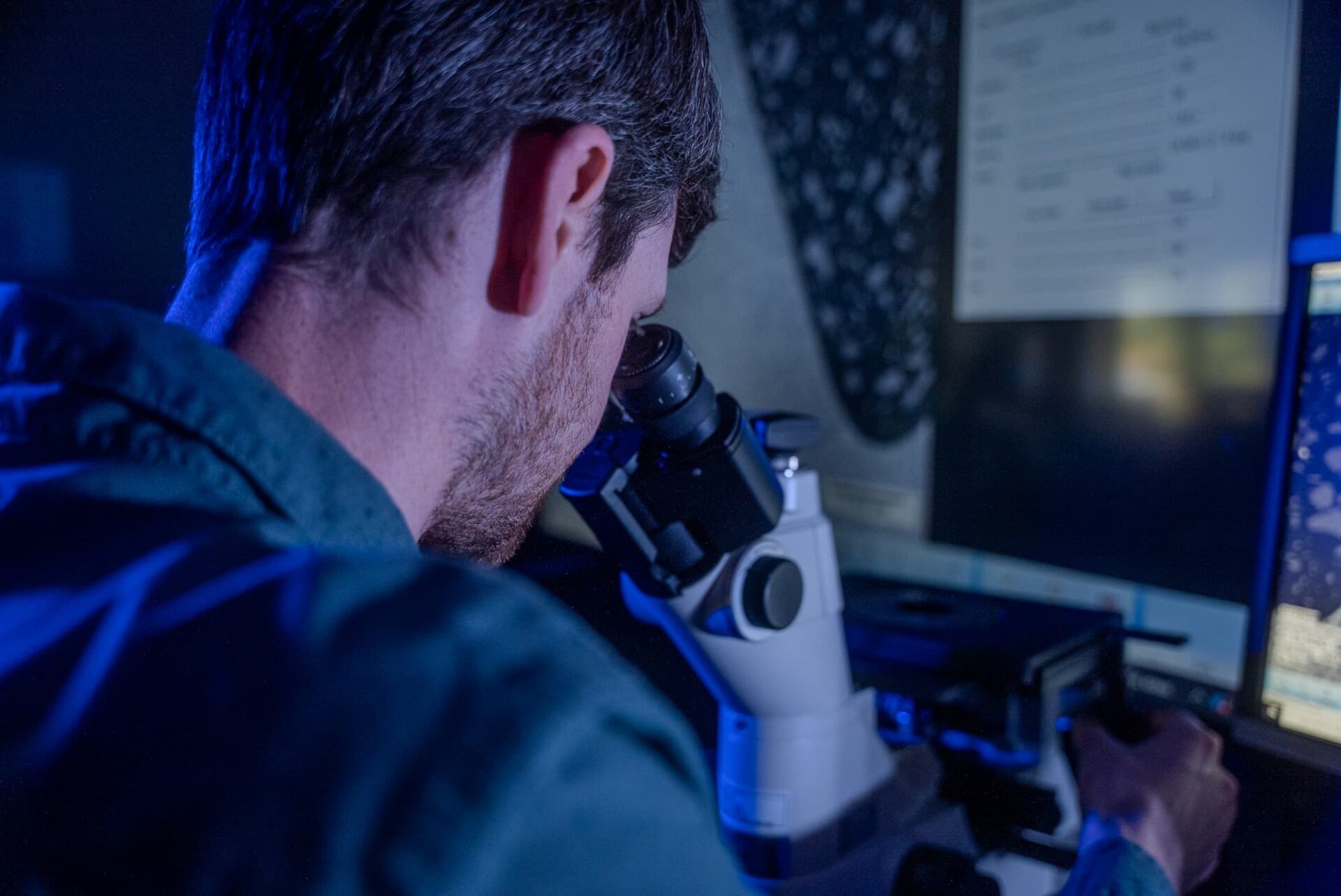
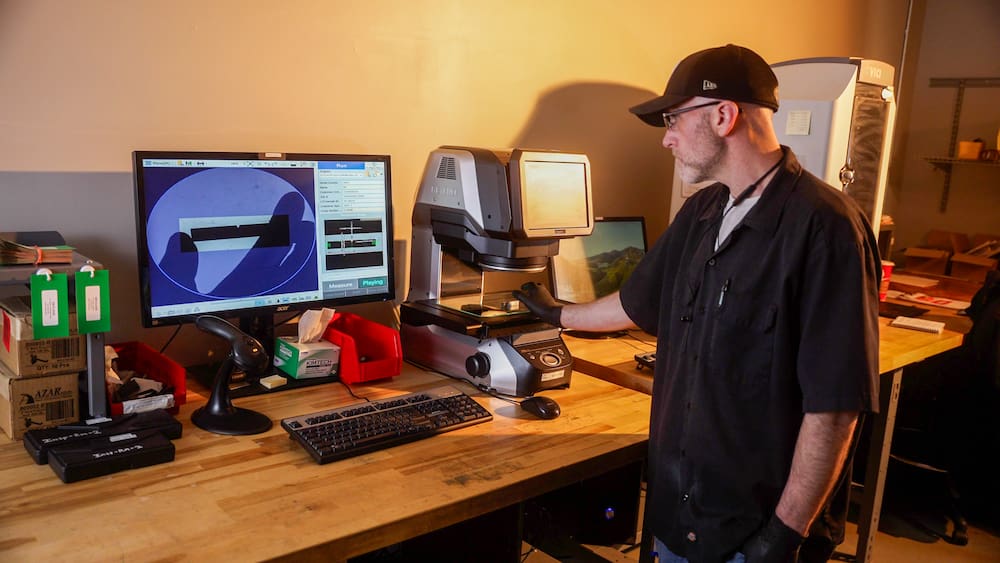
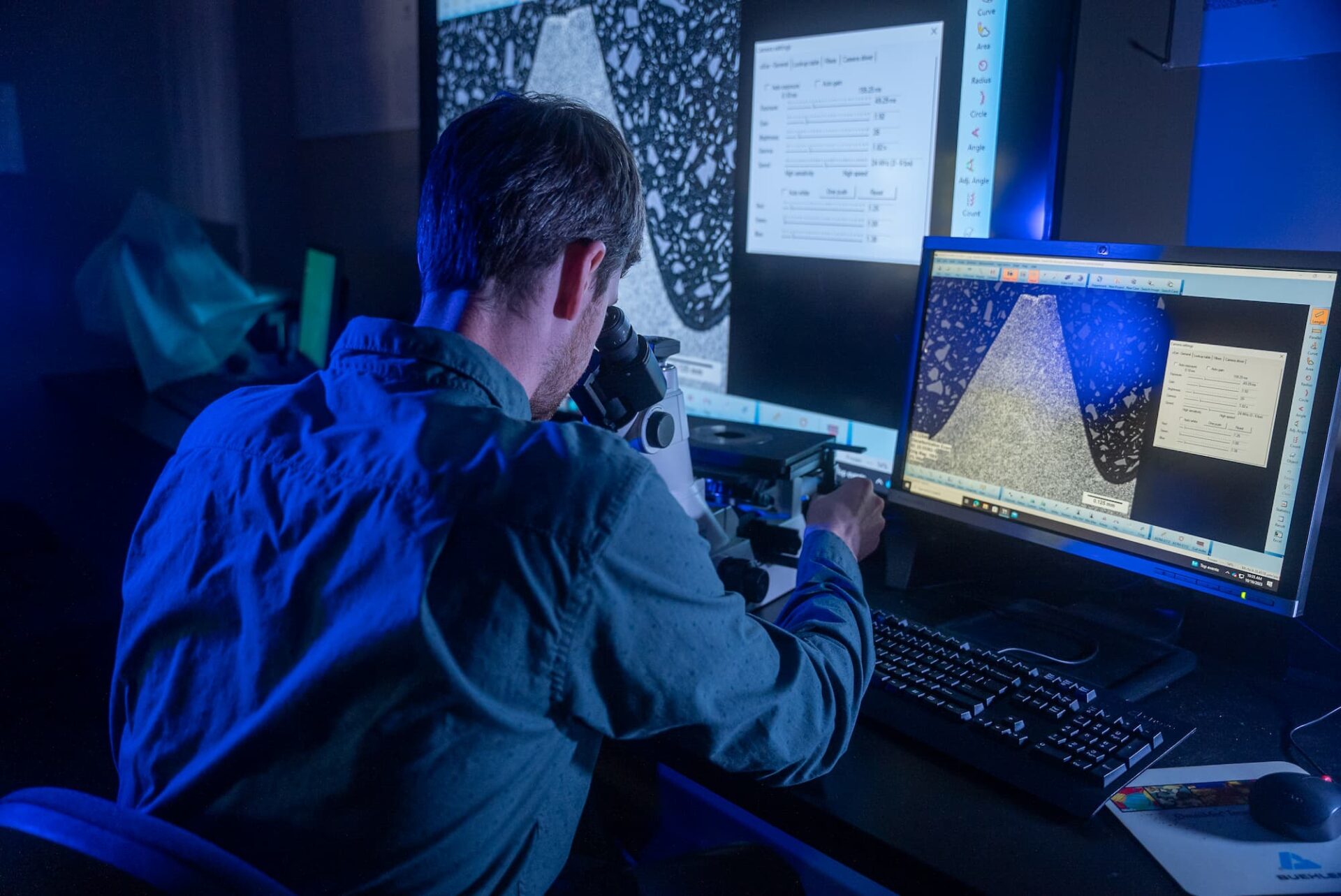
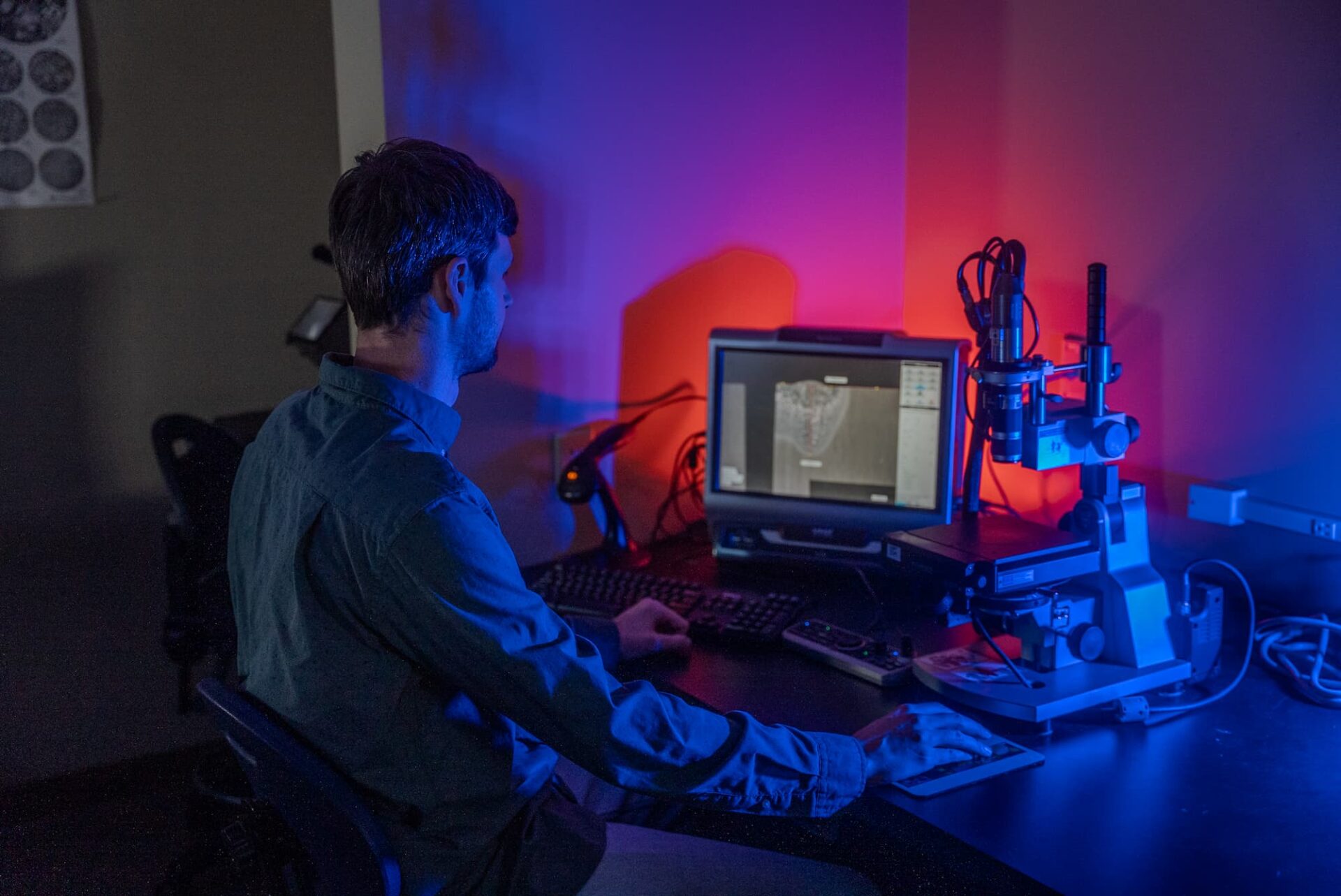
Detailed viewing of samples is done with a metallurgical microscope that has a system of lenses (objectives and eyepiece) so that different magnifications (typically 50X to 1000X) can be achieved. Scanning Electron Microscopes (SEMs) are capable of much higher magnifications and are utilized for highly detailed microstructural study.

The various types of microstructure analysis performed at LTI are PRI/Nadcap and A2LA accredited. Examinations are completed according to detailed procedures and applicable industry standards to assure reliable results. All results are documented in Certified Test Reports.

LTI Capabilities

Microscopic Examinations

  • Microstructure
  • Carburization & Decarburization
  • Grain Size (ASTM E112)
  • Inclusion Rating (ASTM E45)
  • Plating Thickness
  • Carbide Precipitation
  • Ferrite by Point Count (ASTM E562)
  • Alpha Case/Surface Contamination
  • Intergranular Attack & Oxidation
  • Sensitization
  • Nodularity, Nodule Count
  • Eutectic Melting

Photomicrographic Examination
Digital Imaging
– optical magnification from 7X to 1000X
SEM Analysis – magnification to 300,000X