• FREE email and fax certifications
  • FREE pick up and delivery within 60 miles of LTI
  • Same day, next-day, and 2nd-day rush service available
  • FREE online order tracking at LTI Live Update with up-to-the-minute job status
  • Accredited by A2LA to ISO/IEC 17025 and by PRI/Nadcap

Employee Directory Contact Us Accreditations RFQ

OUR CUSTOMERS SAY:

“The Parker Steel management team is very impressed and satisfied with both the service and the professionalism of Laboratory Testing Inc. You were able to provide prompt, knowledgeable service that allowed us to get through a difficult situation and ship a very important order. Thanks for all your help and we will be in touch for future testing opportunities.”

Todd Meyer,
Quality & Operations Mgr.

» READ MORE TESTIMONIALS


Connect with us!


We Accept:

Hydrostatic Pressure Testing

Can it Take the Pressure?

Hydrostatic pressure testing

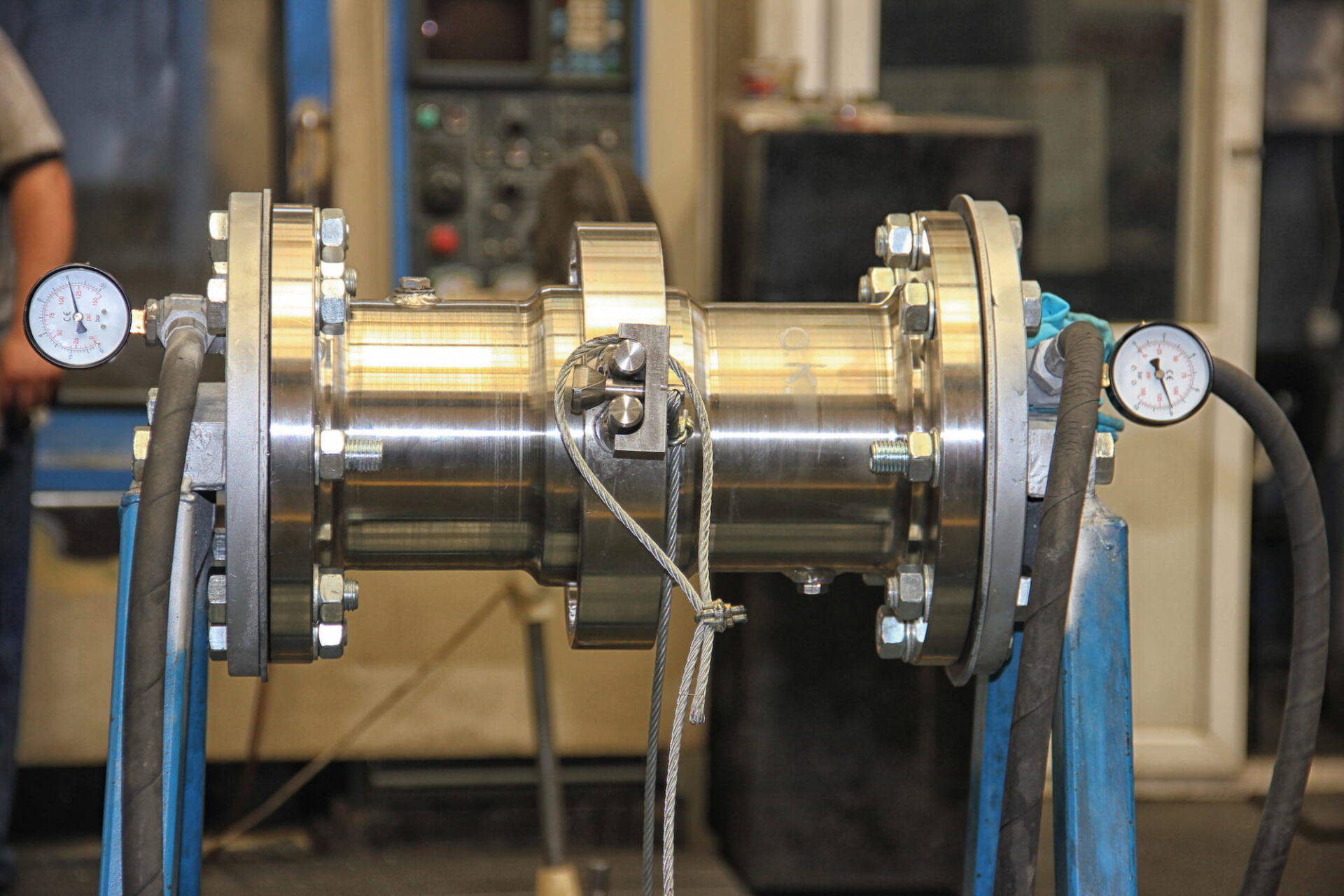
Hydrostatic Pressure Testing provides a method for finding leaks or verifying performance and durability in pressure vessels such as pipe, tubing, and coils. Although a hydrostatic pressure test is considered a nondestructive test, failures can occur when the test piece does not meet performance or durability specifications and may render the piece unusable.

The Test Process

Standard hydrostatic testing procedures entail filling the test vessel with liquid, bleeding out air and then pressurizing the piece. Our technicians thoroughly examine the vessel for leaks or permanent changes in shape. The test is performed with a nearly incompressible (compressible only by weight, not air pressure) liquid, usually water or oil, because it will only expand by a very small amount should the test piece fail and not pose a danger to the technician. The hydrostatic pressure test can also be performed with pressurized air, but the test is generally carried out with the vessel under water for safety reasons. LTI is equipped to provide hydrostatic pressure testing using water, oil, or air under water. Water is our most commonly used test medium because it is less expensive than oil, an easier method to set up than air, and is the least costly of the three.

Hydrostatic pressure test

The pressure used in hydrostatic pressure testing is always considerably more than the operating pressure to give the customer a margin for safety. Typically the test is performed at 150 percent of the design or working pressure. For example, if a pipe was rated to a working pressure of 2000 PSI, it would be tested at 3000 PSI. Our technicians can test tubing, pipe and coils to pressures up to 10,000 PSI in many cases.

LTI Capabilities

  • Testing Medium – water, oil, air (under water)
  • Products Tested – tubing, pipe, coils
  • Pressures to 10,000 PSI